The Mom Test and the Problem We Didn't Know We Were Solving
Sometimes customer discovery doesn't validate your original idea. It changes the question entirely.


In this Article

There is a comforting stage in building a company when you think you're doing customer discovery.
You explain your idea. Someone tells you it sounds useful. They can see why it might work. Maybe they even say they would pay for it.
You come away feeling encouraged.
But encouragement isn't validation.
We learned that fairly quickly while exploring what would eventually become Lighthaus.
So we changed the way we approached conversations.
Instead of asking people whether they liked our idea, we started asking about things that had already happened.
When did you last face this problem? What did you do? Who handled it? How long did it take? What happens when something goes wrong?
Those questions produced a very different kind of conversation.
And slowly, a pattern began to emerge.
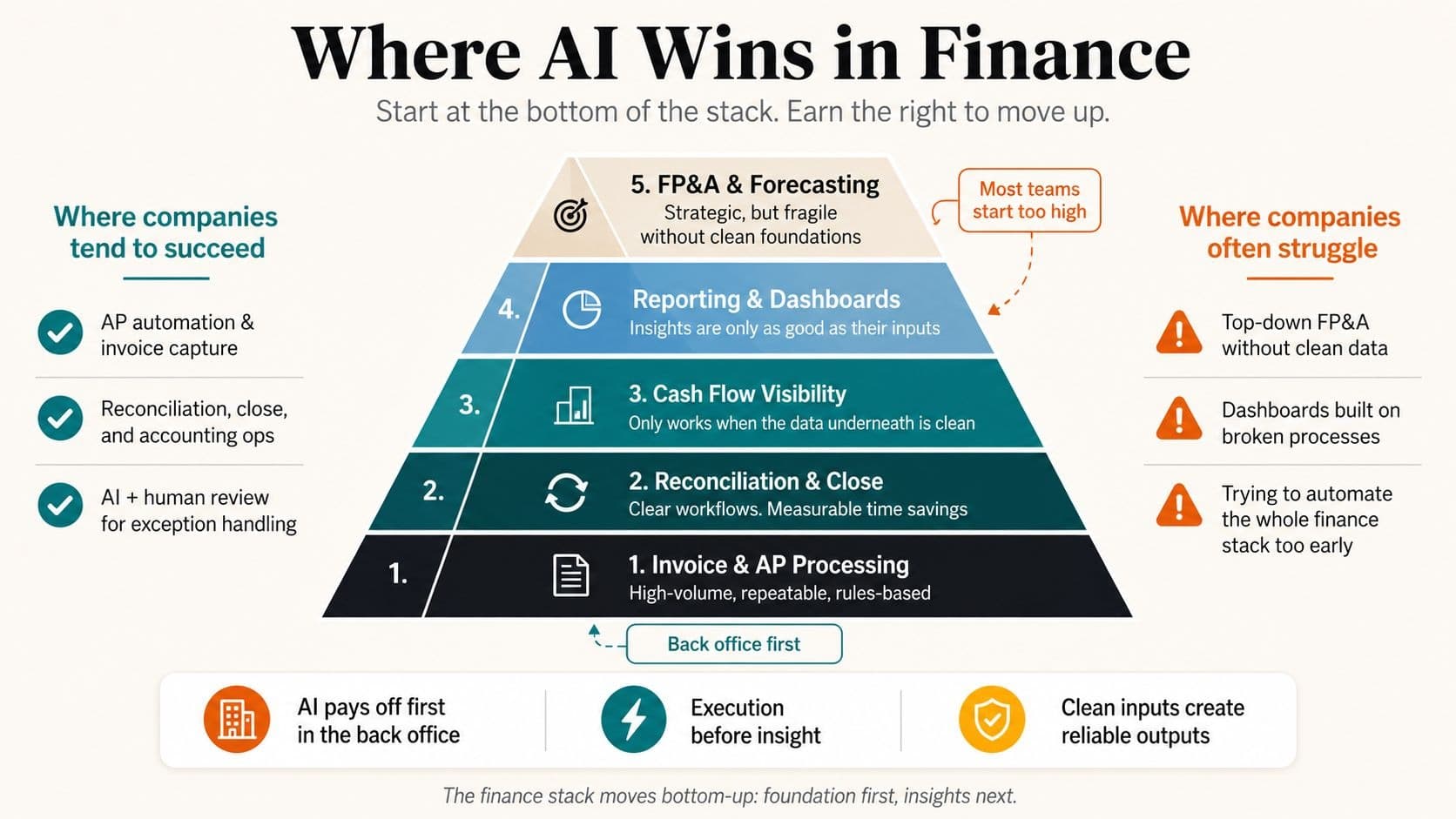
The problem wasn't that founders didn't have accounting software
Most businesses already had accounting software.
They had accountants.
They had spreadsheets.
They had ERPs, bank statements, marketplace dashboards and internal processes.
What they didn't have was a reliable way to make all of those pieces work together.
As businesses grew, their financial operations became increasingly complicated. More sales channels meant more settlements. More warehouses meant more inventory movements. Multiple GST registrations meant more reconciliation. Returns, marketplace fees, payment gateways and invoices created yet more transactions that had to be understood and matched.
The accounting system was supposed to make sense of all of this.
Instead, a surprising amount of the work still depended on humans manually connecting the dots.
One founder might spend several days every month dealing with accounting and MIS. Another might wait weeks or months for a reliable P&L. Another might spend hours downloading marketplace reports and preparing information for the accountant.
The details differed.
The underlying frustration didn't.
The business was moving faster than the financial reporting process.
Then we noticed the workarounds
This was perhaps the most useful signal we encountered.
Founders weren't simply telling us that accounting was painful.
They were doing something about it.
They were building spreadsheets.
They were downloading reports from marketplaces.
They were manually reconciling payments.
They were chasing accountants.
They were creating internal processes.
And increasingly, they were turning to AI.
We heard about founders using ChatGPT and Claude to help with reconciliation and other accounting tasks.
That was fascinating.
Not because ChatGPT was suddenly an accounting system.
It wasn't.
What mattered was the behaviour.
When someone is willing to take messy financial data, put it into an AI tool and try to make sense of it themselves, they're telling you something important:
The existing workflow isn't working well enough.
They're not waiting for a perfect product.
They're trying to solve the problem with whatever they have.
Accounting becomes harder as the business grows
The D2C businesses we spoke to made this especially obvious.
A business might begin with a website and one bank account.
Then it expands to Amazon.
Then another marketplace.
Then quick commerce.
Then multiple warehouses.
Then multiple GST registrations.
Suddenly, “How much did we sell?” is no longer a particularly useful question.
You need to know what was ordered, what was paid, what was returned, what fees were deducted, what was actually settled, where inventory moved, which GST registration the transaction belongs to, and whether all of those events have been reflected correctly in the books.
The transaction itself is only the beginning.
Someone still has to reconstruct what happened.
And that reconstruction is often manual.
This is why accounting increasingly starts to look less like data entry and more like an operations problem.
The accountant has a problem too
It would be easy to frame this as founders versus accountants.
That's not what we found.
The accountants were often dealing with the same broken workflow from the other side.
Client information arrives from multiple systems. Data is incomplete or formatted differently. Clarifications are required. Reconciliation takes time. And a lot of business context lives inside the head of the person managing the account.
When that person leaves, some of the context leaves with them.
For founders, changing accountants can therefore feel like starting over.
For accounting firms, bookkeeping itself can be difficult economics: a lot of manual effort for work that clients don't necessarily value highly enough to pay much more for.
Both sides are frustrated.
And both sides are spending time compensating for the limitations of the system.
That led us to a more fundamental question.
What are businesses actually paying for?
This was the point where our thinking started to change.
When a founder pays an accounting firm every month, are they really paying for someone to operate Tally?
Are they paying for spreadsheets?
Are they paying for someone to download marketplace reports?
Not really.
They're paying for an outcome.
They want their books to be correct.
They want transactions reconciled.
They want compliance handled.
They want to understand what happened financially.
And, crucially, they want that information while it can still influence a decision.
The software is simply one part of the process used to produce that outcome.
The work is the product.
That distinction changed the opportunity we were looking at.
From software that helps to software that does
The obvious approach would have been to build better accounting software.
A better interface.
Better dashboards.
Better automation.
But the conversations pushed us toward a different question:
What if we didn't build software that helped people do the work faster? What if we built software that actually did the work?
That's where AI became particularly interesting.
An AI system doesn't need to stop at presenting information.
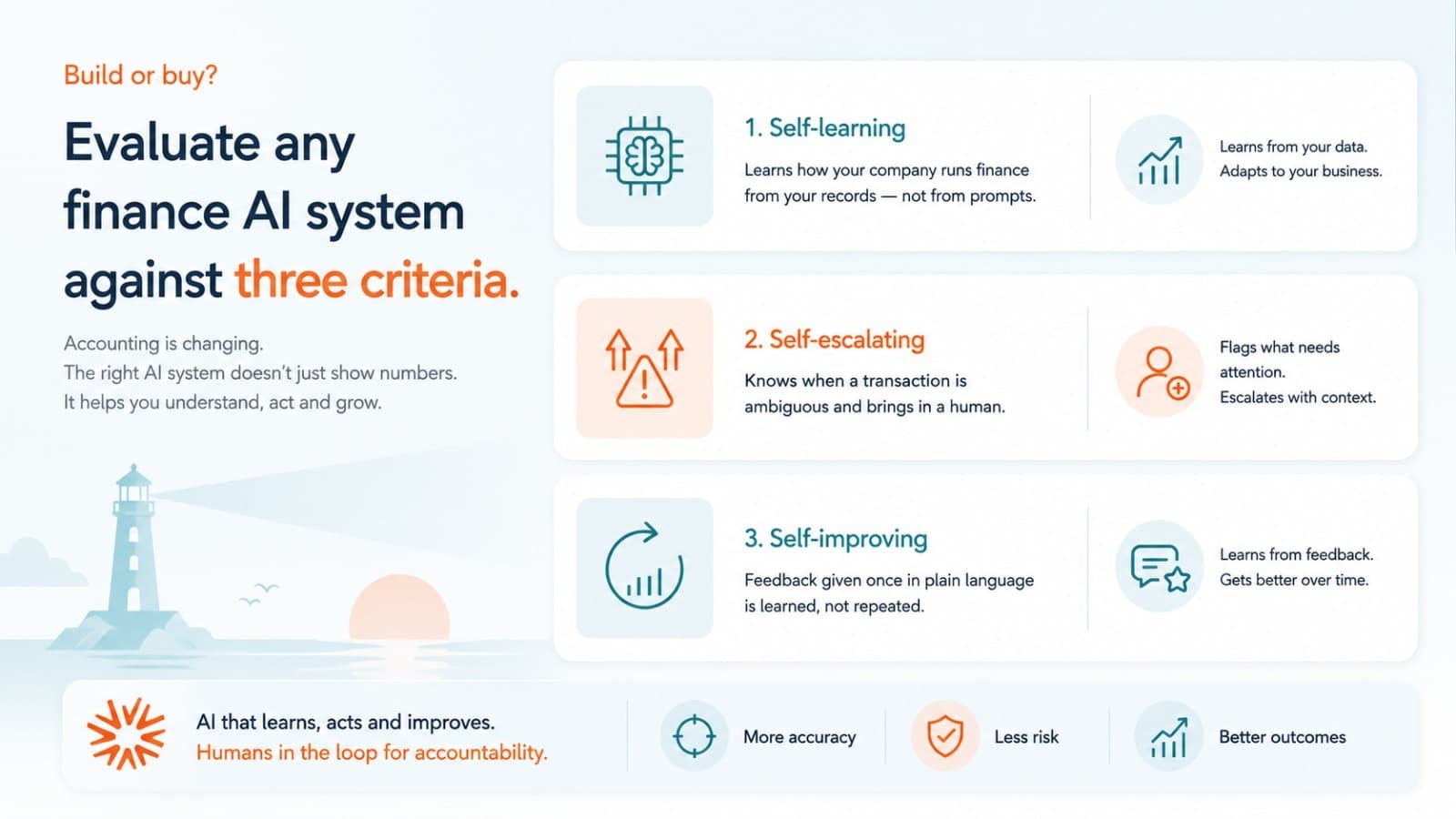
It can observe transactions across systems, understand relationships between them, create entries, identify anomalies and escalate exceptions when human judgment is needed.
A sale happens.
A payment arrives.
A marketplace deducts a fee.
A customer returns the product.
Inventory moves.
An invoice comes in.
The system can continuously follow what happened and translate those events into financial records.
Instead of waiting until the end of the month to reconstruct the business, the books can start reflecting the business as it happens.
That's a very different way of thinking about accounting.

Find your gap before month-end
We'll reconcile one month of settlements against your orders. No commitment.
The real lesson from The Mom Test
The most valuable lesson from The Mom Test wasn't simply that you shouldn't ask leading questions.
It was that behaviour tells you more than enthusiasm.
Someone saying, “That's a great idea,” is easy to get.
Someone spending three days every month solving a problem is much more interesting.
Someone paying for an accountant while still doing part of the work themselves is interesting.
Someone building an internal workaround is interesting.
Someone using ChatGPT to reconcile their books is very interesting.
Those behaviours helped us see that this wasn't a hypothetical problem waiting for a solution.
There was already a significant amount of money, time and human effort being spent around it.
The question was whether the underlying workflow could be fundamentally rebuilt.
We started with accounting. We ended up thinking about work.
That was the real discovery.
We didn't set out to conclude that accounting software was the wrong market.
We got there by listening to what businesses were actually doing.
The more we looked, the clearer it became that the customer wasn't necessarily asking for another tool.
They were asking for an outcome:
“Take care of this for me.”
And that opens up a much bigger possibility for AI.
Not just AI that answers questions.
Not just AI that generates reports.
Not just AI that assists a human.
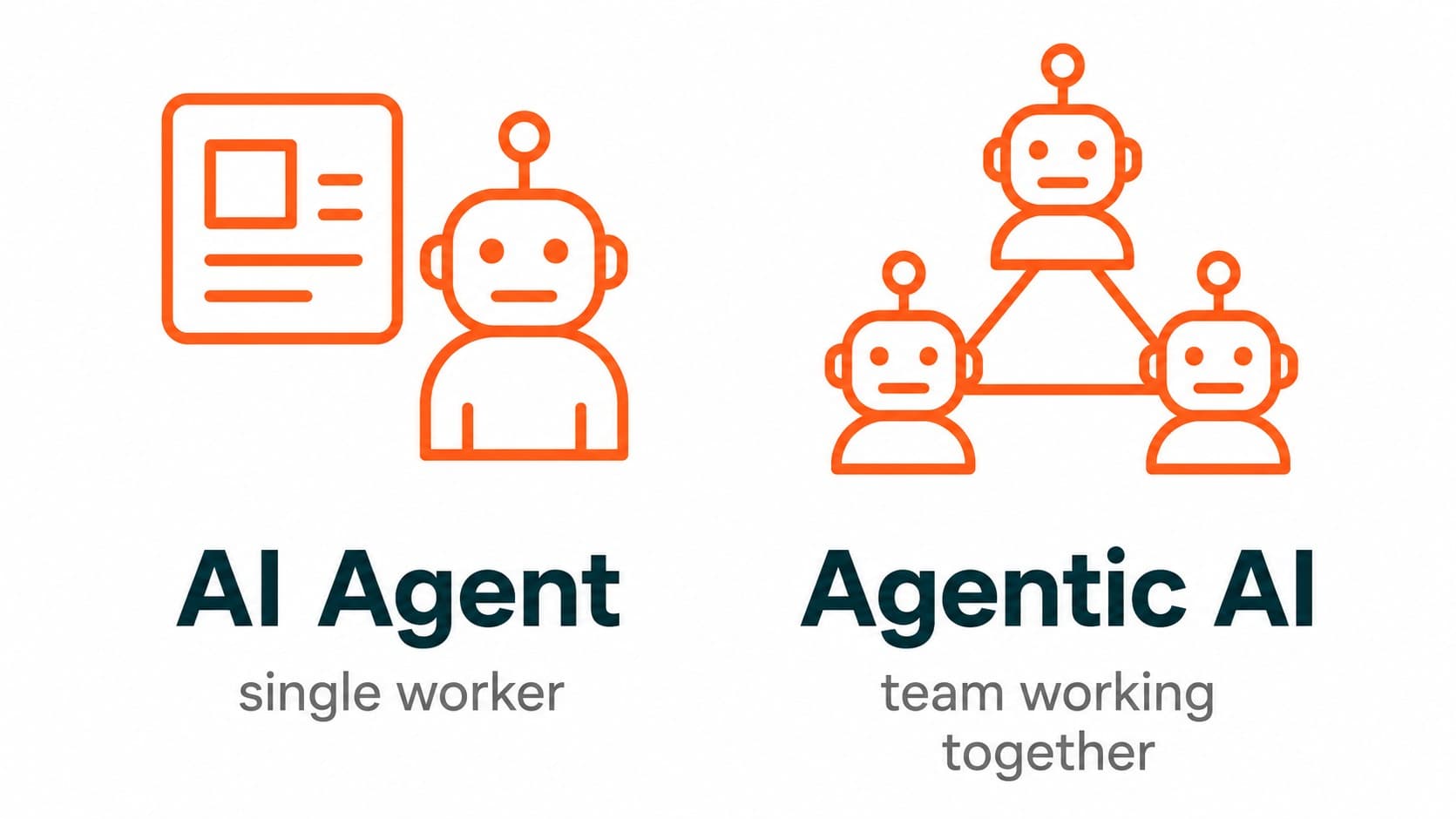
But AI that can take responsibility for a workflow, execute the work, learn from exceptions and bring a human in when judgment is required.
That is the idea that eventually became Lighthaus.
And it all started with something much less sophisticated:
asking better questions.
The next question was harder.
If AI can actually do the work, where should the human sit in the loop—and how do you build a system that people can trust with their books?
That's where the story continues.
Watch the podcast here - https://lnkd.in/p/eZBwdHZD

Amulya leads GTM and customer discovery at LightHaus. She is the authority on what exactly the market needs with respect to their financial operations and effectively translates that internally in LightHaus to ensure that the offering delivers high value to our clients
Get in touch
We get back to you within 24 hours