The Ledger Was Never the Moat
Accounting software was never defended by its features. It was defended by the cost of leaving, and agentic migration is collapsing that cost. The real work sits in the action layer around the ledger, in the thousand small reconciliations and fixes that only look like judgement work. That inverts the stack: the ledger becomes a commodity, the action layer becomes the product, and humans stay for accountability.


In this Article
The Ledger Was Never the Moat
Every accounting software is a database with opinions.
It stores transactions, enforces double entry, and rolls those entries up into a P&L. That has been table stakes for thirty years.
So it is fair to say, as many now do, that AI can rebuild this over a few weekends. That may well be true. But the software was never the defensible part. The moat was switching costs. Your accountant knows the screens. Years of history sit inside the system. Nobody wants to move once they are locked in.
Migration was the wall, and it is coming down
That moat is real, but it is shrinking.
Leaving used to mean remapping an entire chart of accounts, cleaning years of messy history, and rebuilding every integration by hand. Months of work, with a live risk of breaking the books. So people stayed.
Agentic processes are compressing that work into days. When leaving becomes cheap, holding the data stops being a strategy.
The work was never in the ledger
The bigger shift is about where the hours actually go.
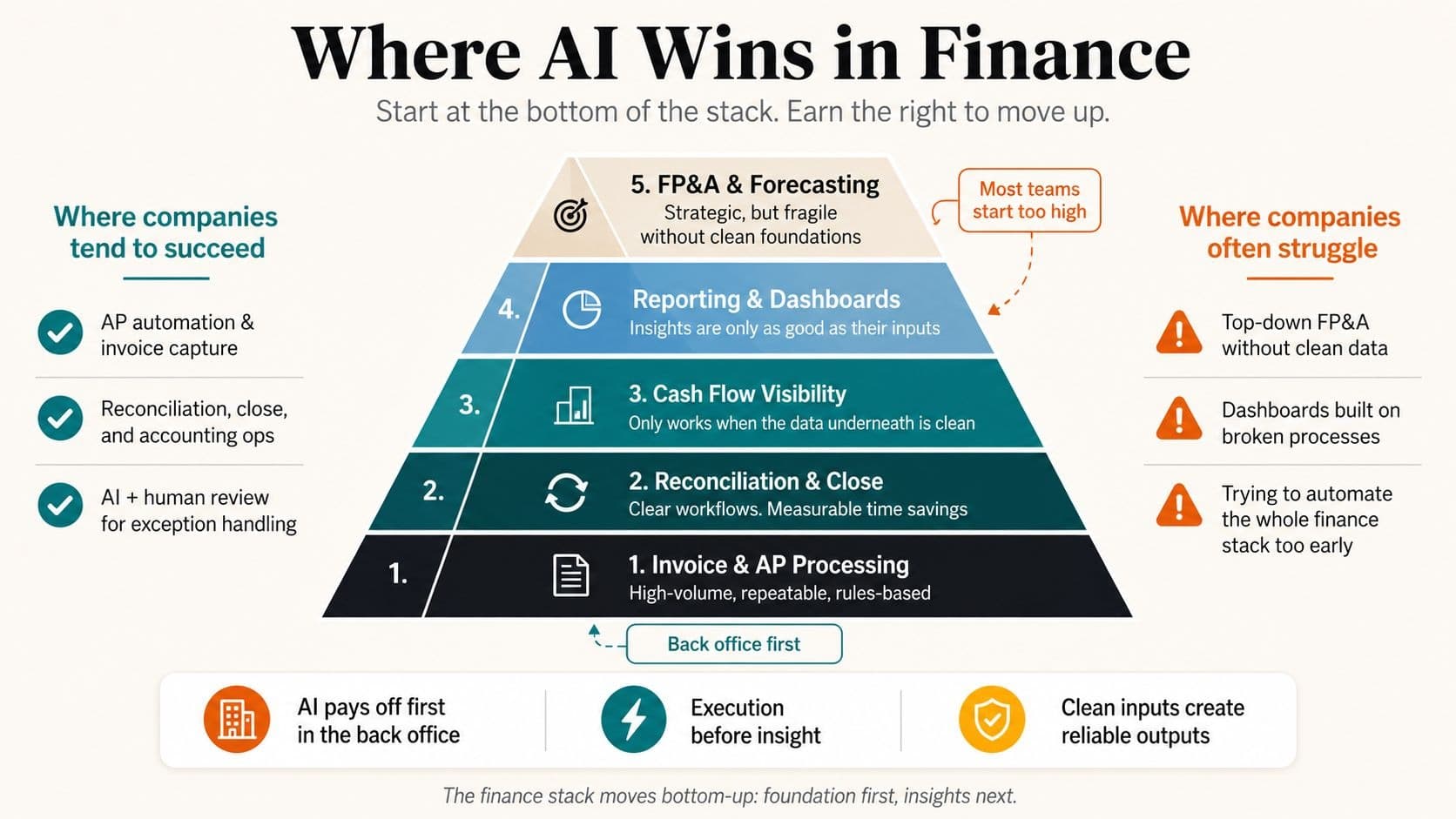
For most businesses, almost none of the time is spent on the ledger itself. It is spent on everything around it:
Chasing a payment gateway settlement
Matching a Shopify order to an actual bank credit
Lining up order level costs like courier charges and RTO
Working out why vendor invoices and the purchase register do not agree
Call this the action layer. It covers two things:
Bending a generic accounting system to fit how your business actually runs
Every small decision someone has to look at and resolve
This is where the time goes. It is also where the errors are born.

Find your gap before month-end
We'll reconcile one month of settlements against your orders. No commitment.
It looks like judgement, but mostly it is not
This work looks like human judgement work because today only a human does it. Look closer and it is a thousand small, low judgement decisions. They need business context, they repeat, and they run at volume.
Real human intelligence is needed for accountability. Someone has to own the number. But that is a small slice of what accountants spend their day on. Our read is that it sits somewhere around 5 percent.
That 5 percent is where humans belong. The other 95 percent is exactly what AI agents are good at today.
The stack inverts
The ledger becomes cheap. The action layer becomes the product. Accountability sits above both, and stays human.
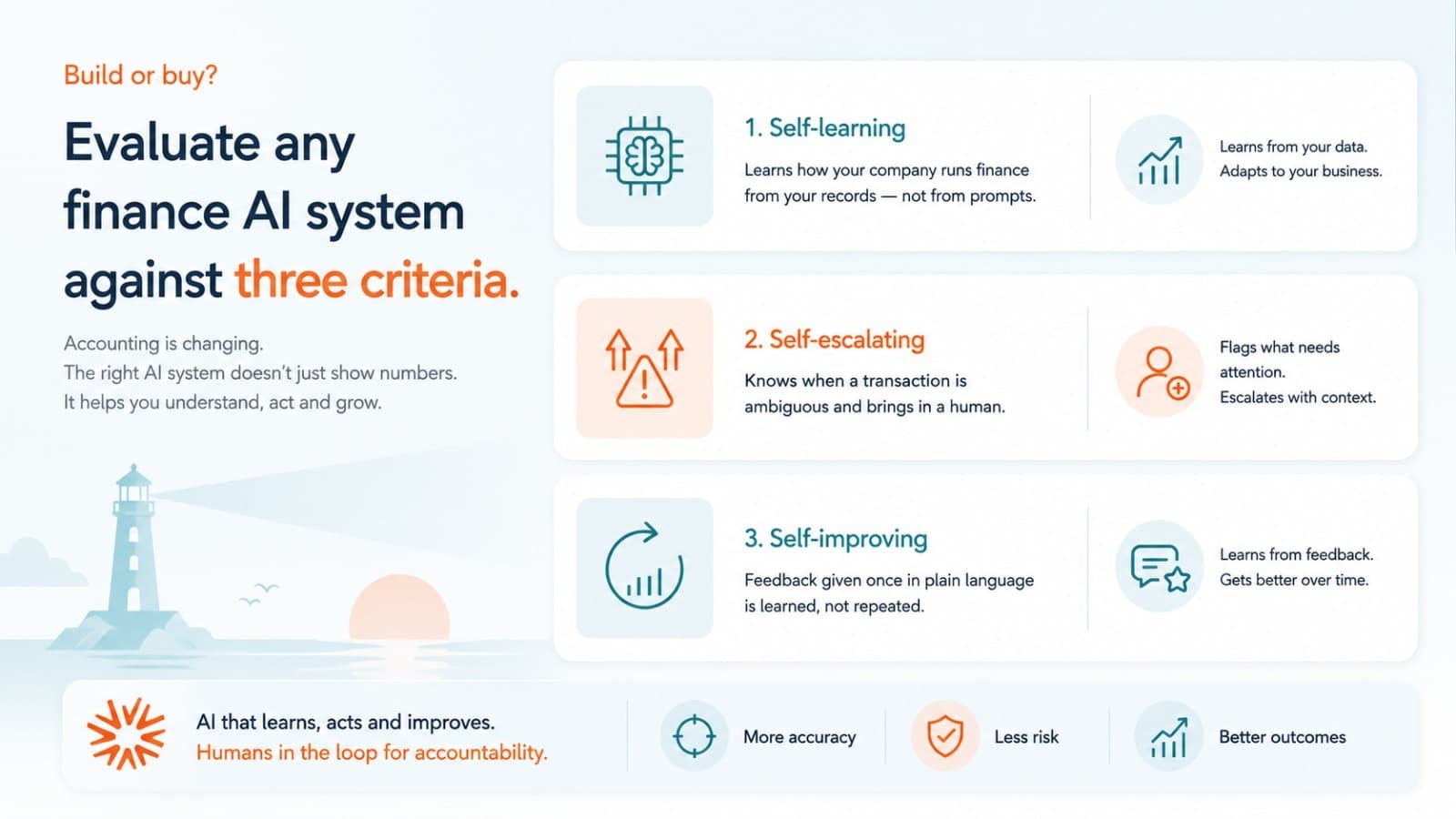
This is the thesis we are building Lighthaus on. An AI native ledger treated as a commodity and shaped to the business. The action layer as the actual product. Humans in the loop where accountability lives.

Bringing financial clarity to business owners is Samhith's life goal after graduating from IIT & ISB.
Get in touch
We get back to you within 24 hours