The Human in the Loop Is Falling Asleep
Why "a human reviews every entry" is the weakest safety net in AI bookkeeping, and what to build instead


In this Article
Every AI bookkeeping tool promises the same safety net: a human reviews what the AI does. The AI categorises transactions, an accountant checks them, and nothing gets posted without approval.
On paper, that sounds safe. In practice, there's a problem almost nobody talks about.
Humans get tired of approving.
The 80th entry problem
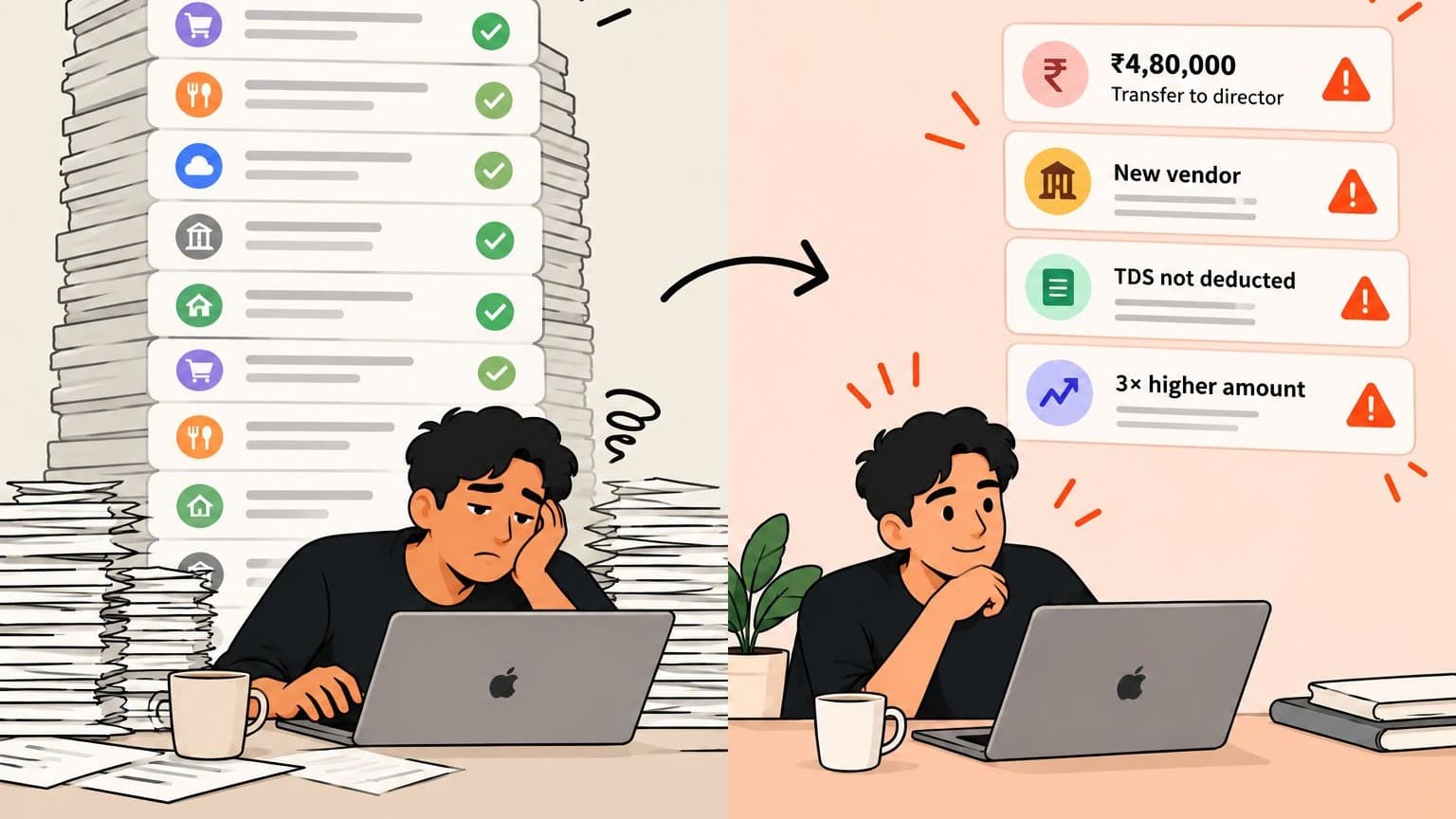
Picture an accountant at month end. Overnight, an AI agent has categorised 400 bank transactions, and they're now waiting in a review queue.
The first few are easy. The AWS bill went to Cloud Hosting. The Swiggy order went to Staff Welfare. The rent went to Rent. Each one looks right, so the accountant approves it and moves on.
By the 80th entry, something has changed. The accountant is no longer reading the details. They're approving based on how the entry looks: familiar shape, familiar ledger, click.
When review becomes a reflex
At this point, the reviewer has turned into a clicking machine.
You've seen this before. It's what happens when someone stamps a pile of papers, or signs every page of a long agreement without reading a word. Boredom takes over. The hand keeps moving while the mind has already left the room.
Somewhere in that pile sits a ₹4.8L round figure transfer to a director's account, booked as "Vendor Payment." It gets approved along with everything else.
Nobody was careless, exactly. The process was designed in a way that guaranteed attention would run out before the queue did.
Trust is not the same as catching mistakes
Most people agree that AI needs a human check. Only 17% of workers say they trust workplace AI without one.
But having a human in the loop and having a human who actually catches mistakes are two very different things. The first is a checkbox. The second is a system that protects the reviewer's attention so it's available when it matters.
More approvals make it worse
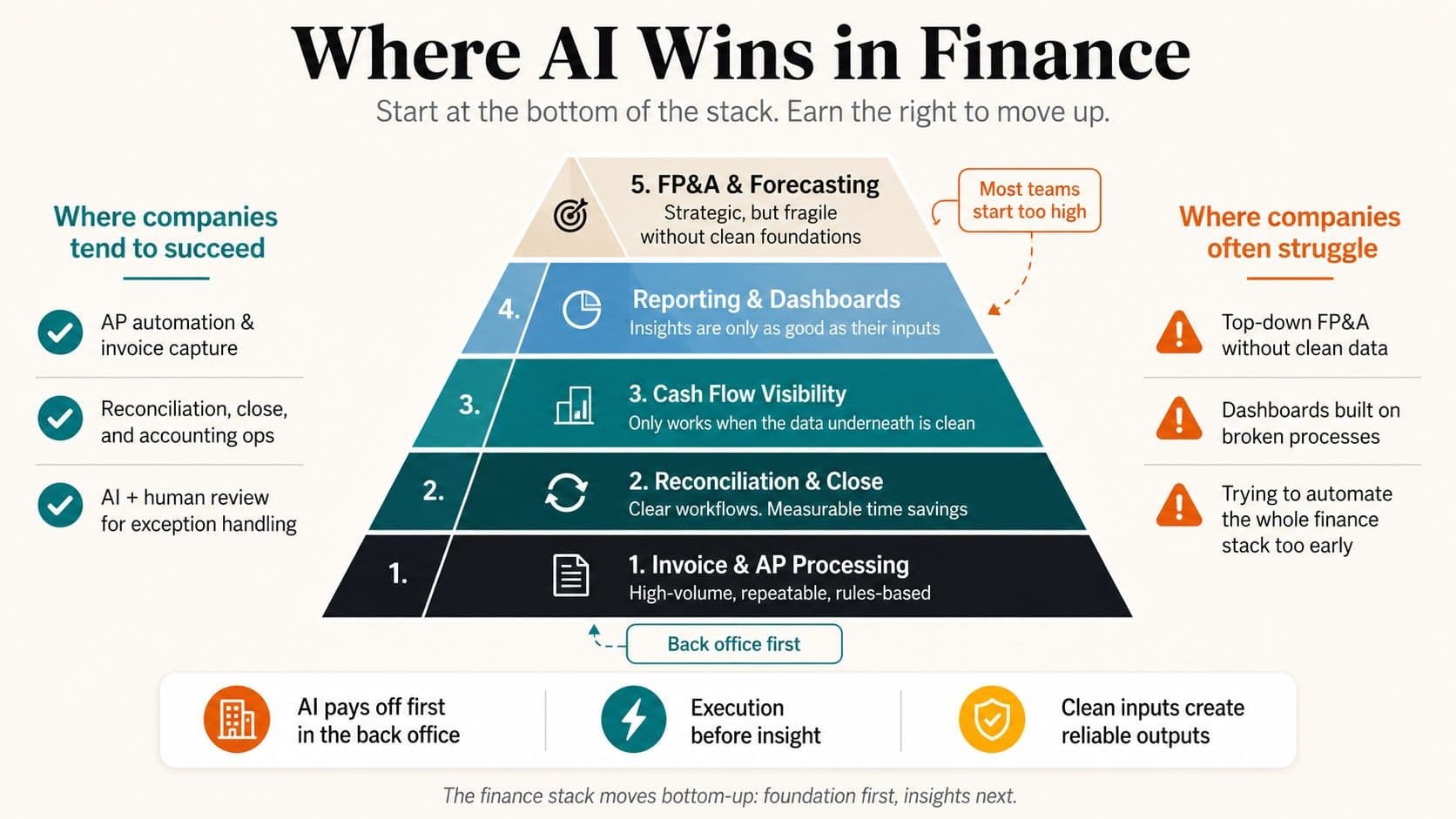
Regulators such as FINRA and the EU are now watching AI in finance closely. The instinctive response from most teams is to add more approval steps.
That only deepens the problem.
When every entry needs a review, no entry gets a real one. Each extra click spreads the same limited attention across a bigger pile, and the risky entry ends up with exactly as little scrutiny as the routine ones.
Design for exceptions, not confirmations
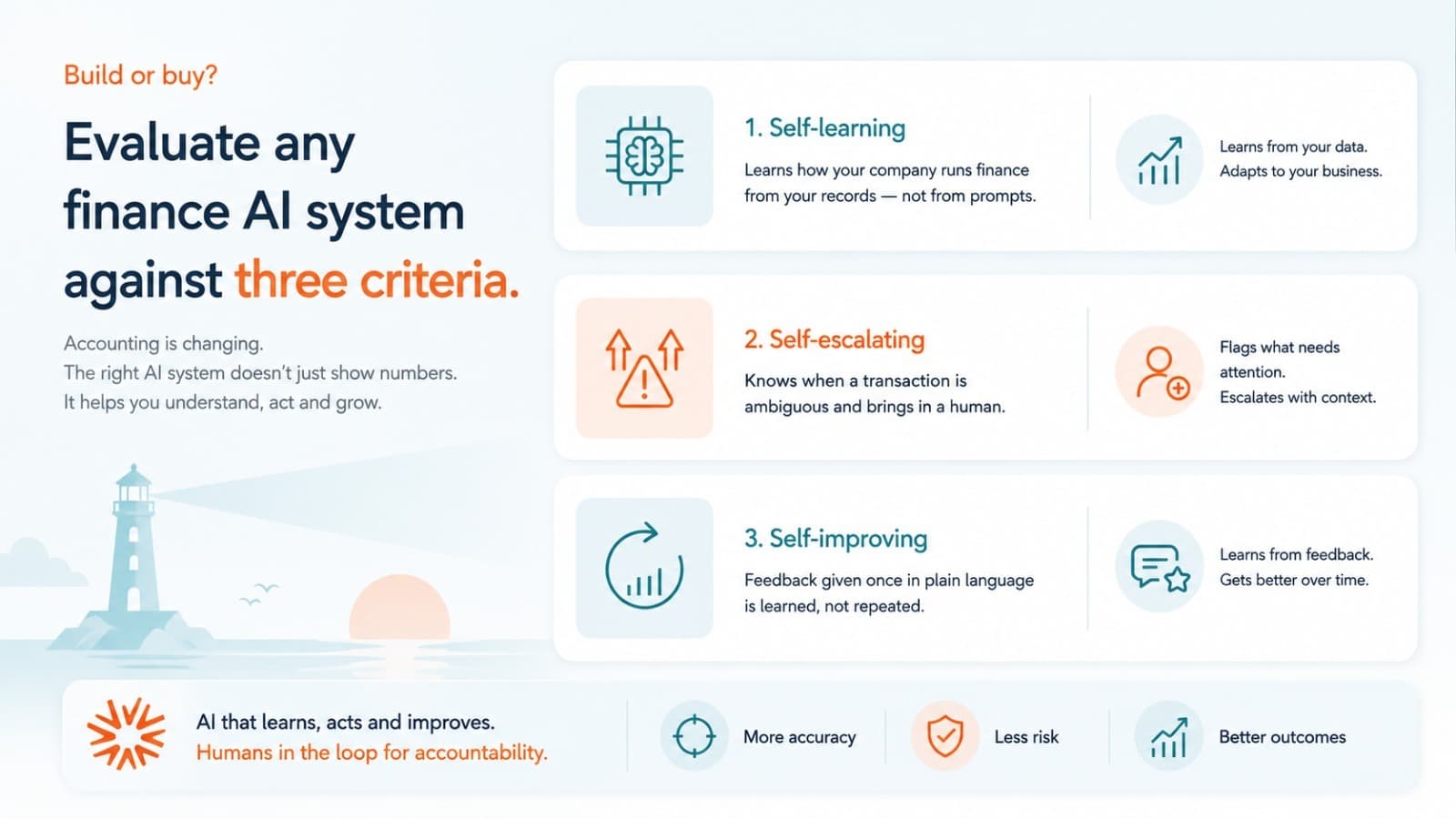
A better approach is to stop asking humans to confirm what's obviously fine, and start asking them to decide what's genuinely unusual.
Routine entries can be posted automatically and logged. An entry counts as routine when all three of these are true:
It comes from a known vendor.
It goes to the same ledger it has gone to for the last six months.
It falls within the usual amount range.
Everything else goes to a human. That includes a new vendor, a bill three times its normal size, a payment where TDS should have been deducted but wasn't, and any transfer to a related party.
With that one change, 400 approvals become about 12 real decisions. And 12 decisions is a number a person can give full attention to.

Find your gap before month-end
We'll reconcile one month of settlements against your orders. No commitment.
Two guardrails that keep it honest
Automating the routine pile only works if you can trust it over time. Two guardrails make that possible.
First, randomly sample the entries that were posted automatically. If you never check the routine pile, you never learn your true error rate. Sampling tells you whether your definition of "routine" is still holding up.
Second, version the rules. Every change to what counts as routine should have an owner and a date. When something slips through, you can trace exactly which rule allowed it, who changed it, and when.
Spend attention where it counts
Human oversight only works when the human has the attention to use it.
The goal isn't to remove people from the process. It's to stop wasting them. Define what you trust, write it down as rules, and spend human attention on the exceptions, because that's where the real risk lives.
How does your finance team handle AI review today? Does someone check every entry, or only the exceptions? I'd love to hear how you've set it up in the comments.

Bringing financial clarity to business owners is Samhith's life goal after graduating from IIT & ISB.
Get in touch
We get back to you within 24 hours